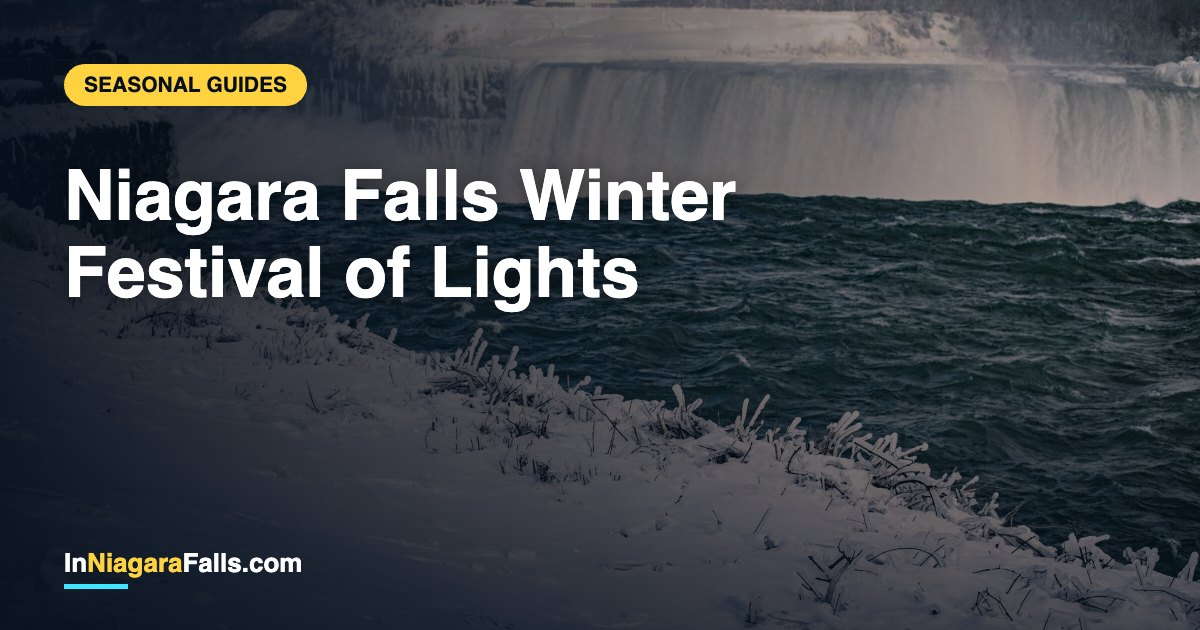
The Niagara Falls Winter Festival of Lights is one of Canada’s largest and most spectacular winter light festivals. Running from late November through February, the festival illuminates the falls, the Niagara Parkway, and surrounding attractions with millions of lights in elaborate animated displays. Here’s everything you need to know to make the most of your visit.
What Is the Winter Festival of Lights?
The Niagara Falls Winter Festival of Lights transforms the Niagara Parkway and surrounding areas into a glittering winterscape with over 3 million lights in more than 125 displays. The festival began in 1982 and has grown into one of Ontario’s premier winter events, attracting hundreds of thousands of visitors each season. The illuminated Horseshoe Falls form the centrepiece — the coloured lights playing off the ice formations that accumulate during cold spells create a visual spectacle unlike anything the summer illumination delivers.
Festival Highlights
The Illuminated Falls
The Horseshoe Falls are illuminated every night throughout the festival. In winter, ice formations accumulate on every nearby surface — railings, trees, cliff faces — and the coloured lights play through the ice in a way impossible to replicate in other seasons. The partially frozen falls and ice-covered gorge create a genuinely unique winter landscape that photographers travel specifically to capture.
Light Displays Along the Parkway
Elaborate light displays line the Niagara Parkway from the falls north through the Niagara Parks. Themed sections include enchanted forests, winter wonderland displays, and large-scale sculptural light installations. Many of the major displays are animated — LED technology allows patterns, colour changes, and movement that static lights can’t achieve.
Dufferin Islands
The Dufferin Islands Nature Area, normally a quiet natural park, transforms during the Festival of Lights into one of the most beloved light display areas. The small islands connected by bridges through a series of small pools create a intimate, walkable light experience quite different from the main Parkway displays. Particularly popular with families and couples.
Practical Festival Information
Dates and Hours
- Festival period: Late November through mid-February (exact dates vary annually)
- Display hours: Lights turn on at dusk (approximately 5pm in December) and run until midnight
- Falls illumination: Runs until 10pm nightly throughout winter
- Weekends: Extended programming and special events on weekends throughout the festival
Admission and Cost
The Winter Festival of Lights is largely free. Walking or driving the Parkway to view the displays costs nothing. The falls illumination is free from public viewing areas. Some special indoor events and attractions within the festival may charge admission — check the festival website for current details.
Getting There
The festival is centred on the Niagara Parkway from the falls north to Dufferin Islands. WEGO bus service runs during the festival season, allowing car-free visitors to travel between display areas without driving. Parking along the Parkway is available at Niagara Parks lots, though these fill quickly on popular evenings.
Hotel Deals During the Festival
The Winter Festival of Lights coincides with the lowest hotel rates of the year in Niagara Falls. Fallsview properties that cost CAD $400–$600 in summer regularly drop to CAD $150–$250 during the festival period. This is the best time of year to afford a genuine falls view room at the top hotels. A Fallsview hotel room with the illuminated, partially frozen falls outside your window during a winter storm is one of the most atmospheric hotel experiences in Canada. See our best hotels in Niagara Falls guide for winter rate recommendations.
Tips for Visiting the Winter Festival of Lights
- Dress for the cold: Temperatures range from -5°C to 2°C; wind chill near the falls can be severe
- Weeknights are quieter: Weekends draw larger crowds — Tuesday through Thursday evenings offer the most peaceful festival experience
- Combine with indoor attractions: Journey Behind the Falls, Butterfly Conservatory, and the Fallsview Casino are all excellent warm-up stops between outdoor display walking
- Photography: Long-exposure shots of the illuminated, ice-covered falls at night are extraordinary — bring a tripod
- January for ice formations: The most dramatic ice formations typically develop in January after sustained cold spells — plan for mid-January for peak ice
Plan your festival visit alongside our guide to visiting Niagara Falls in winter and our best time to visit guide for complete seasonal planning.